
The past few years have shown us a lot about our current capitalist model — massive income inequality and the idea that improving lives and caring for the environment is secondary to higher profit margins. The change makers in the growing B Corp community say: enough! Profit should not come at the expense of purpose, people and the planet. It's time to wake up. Time for action.
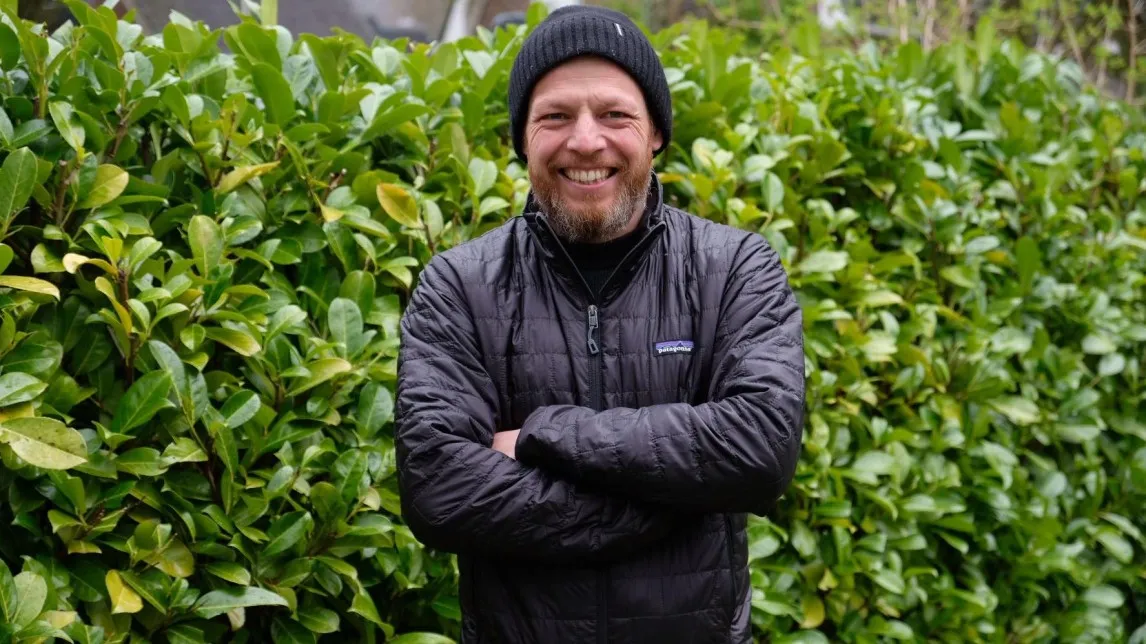
At Blyde, we believe in questioning the status quo. We believe in the power of working together, standing for something and inspiring people by showing what can and should change. In our weekly Wake-Up Calls, Blyde stimulates the appetite for positive change. We're listening to various B Corp voices sharing their call to action for companies around the world. By letting people from different sectors have a say, we show how important the role of companies is in this decade of action. Today on stage: changemaker Cem Tanyeri — country manager Benelux at Patagonia, the purpose-driven outdoor clothing company that is in business to save our planet.
What was your wake-up call to contribute to a better world?
This may sound idealistic, but before joining Patagonia, I had the privilege of working at Nike. It was a great time: I traveled around the world, met sports idols and learned a lot. After almost eight years and several reorganizations, I had to pause and assess my situation. Was I comfortable with 30 flights a year? How did I feel when I saw colleagues who were constantly falling victim to reorganizations just to meet budgets and please shareholders? Consumption had taken over much of my identity and I was uncomfortable with this status quo.
When our daughter was born, that was the real wake-up call. I began to imagine a world where she would grow up and what challenges she and her generation would face. The more I read about climate change and our current consumption of planetary boundaries, the more concerned I became. But it also fueled my determination to do things differently. And although I had vowed never to work for a boss again, the opportunity to work at Patagonia came my way. That was almost eight years ago. Since then, I've never looked back. For the first time, I really felt that I could use business to create positive change.
What is your call to action for companies around the world?
We need a drastic reform in how we do business — yesterday. It is a fact that we have less than ten years to make the necessary changes that are critical to the health of our planet and our chances of survival. Companies, big or small, need to reassess their purpose. The rate at which we are depleting the planet is irresponsible. We need to invest in reducing emissions, making better and longer-lasting products that can be reused, and pay employees a fair price. Doing business purely for unlimited profit is a path to extinction. I encourage companies to take a step back and redefine their mission and vision based on responsible production, fair trade and CO₂ reduction.
Which Sustainable Development Goal appeals to you the most and why?
Goal #13: Urgent action against climate change. Our mission at Patagonia is clear: “We are in business to save our home planet”. We aim to be a net-zero company across our entire supply chain by 2025, but we're also calling for larger structural changes. Two important action points: switching to regenerative agriculture and saying goodbye to fossil fuels in favor of solar and wind energy.
Regenerative agriculture is crucial because modern industrial agriculture has destroyed our soil's ability to retain CO₂. By going back to traditional farming methods, we can restore our valuable upper layer and store CO₂. This means: fewer fertilizers and pesticides, no ploughing (no-till farming), more diverse crops and cover crops. Phasing out fossil fuels must happen faster than some countries are currently planning. Solar and wind energy are viable options and energy should be in the hands of citizens and energy communities, not companies like Shell.
What do you hope to achieve by 2030?
Our mission is ambitious: to be in business to save our planet. By 2030, I hope that we have not only exceeded our goals, but also fueled fundamental changes in the clothing industry. Less than 1% of all materials in the $1.9 trillion global fashion industry are now recycled, and less than 1% of cotton is organic. I hope that big companies will embrace Fair Trade certification, switch to Regenerative Organic Cotton and only use recycled plastic as raw material.
Which companies would you invite to become a B Corp?
I would challenge impactful companies and shareholders. I hope that big clothing companies can convince their shareholders that investing can also be good for the planet, not just for the financial result. If we really want to make an impact, the big players need to get involved. For me, Nike could be such a company.
Change starts with people who speak up. Are you thinking of someone — or are you the one — who could be the next wake-up call? Contact us at info@blyde.nl
.webp)